In the social impact sector, we often speak of the challenges we face in terms of scarcity: scarcity of funding, scarcity of time, and scarcity of staff. However, a closer look reveals that our most critical shortage may not be material resources, but relational infrastructure.
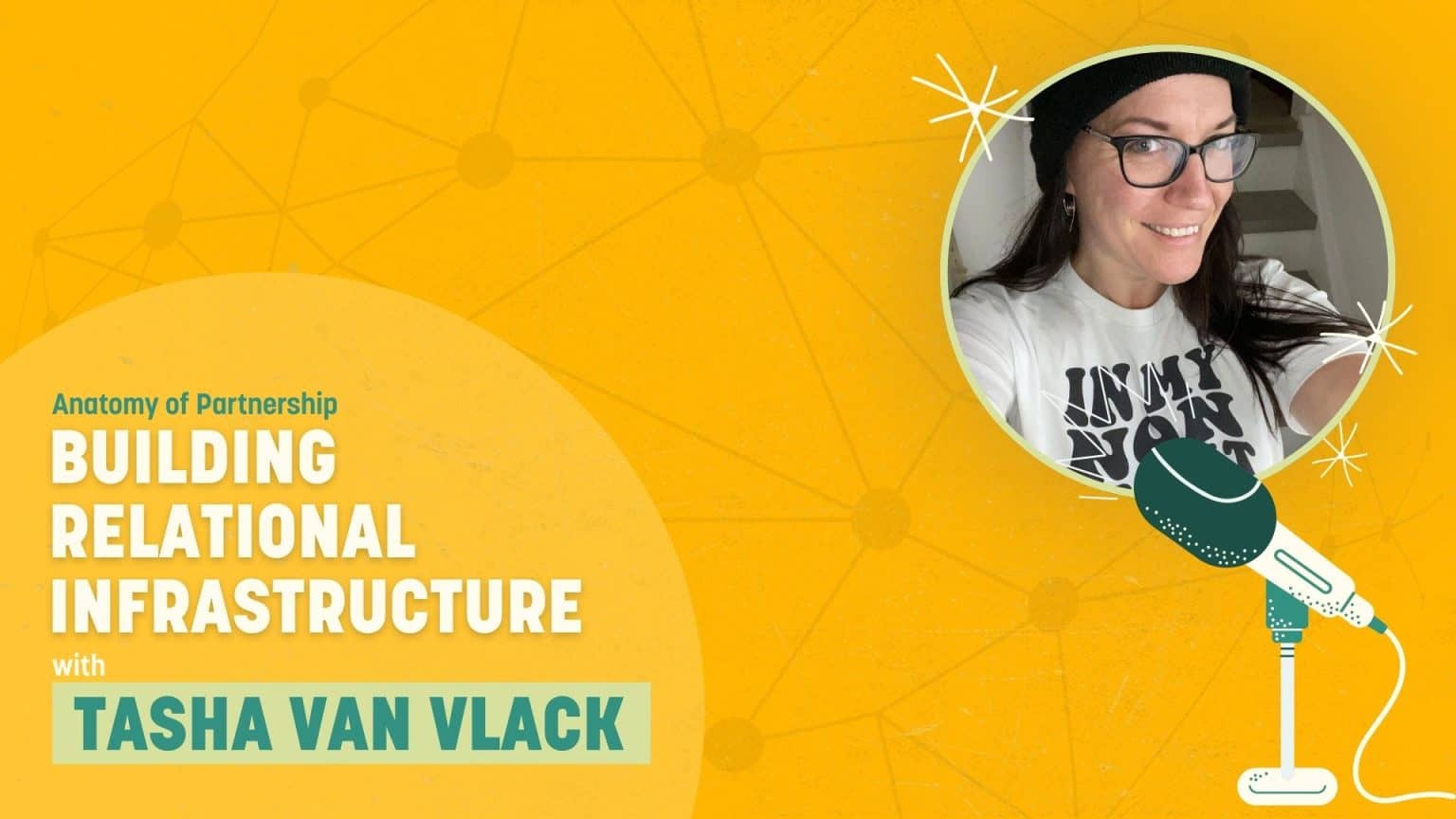
In this edition of Anatomy of Partnership, we sat down with Tasha Van Vlack, Co-Director of The Nonprofit Hive and Community Hives, to discuss how breaking down silos isn’t just a “nice-to-have”—it is a structural necessity for a thriving social impact ecosystem.
Transcript
Tasha Van Vlack: So hello, I’m Tasha Van Vlack, and I’m the founder at The Nonprofit Hive and Community Hives. I’ve started to try to figure out how to describe myself and the work I’m doing. And I’m going to be honest, Eric, it’s very hard sometimes, but I am a community builder. That’s something I’ve come to accept. But I started out as a marketer and I realized that I kind of actually sit at this intersection of relationship building and systems design. And I could just kind of see how to weave people together. And now I spend my time helping nonprofits and social impact professionals move out of isolation and into meaningful human relationships. And I’m doing that through both technology, but also through my own community. That’s The Nonprofit Hive.
Eric DePalma: Oh my gosh, I’m so excited. For those watching, you might also know that the Partnership Program has its own Hive, which we’re so excited about and we’ve gotten so much great feedback on, and that’s all due to Tasha and Nicole and us meeting earlier this year. I don’t even remember when, but it’s crazy to think that we haven’t even known each other for a year.
Tasha Van Vlack: It’s crazy.
Eric DePalma: But the reason I wanted to have you be the first on this new series is because I feel like you and The Nonprofit Hive and the Community Hive and just like the general community that you’ve built are so indicative of what we’re trying to do over at the Partnership Program and specifically here in Los Angeles. Like as someone that’s grown up in Southern California and spent a lot of time in nonprofits around here, the Community Hives and The Nonprofit Hive is exactly what I think the sector needs. So I don’t know, I feel like you just embody a lot of what the social sector needs right now.
And with that, we’ll jump into it. I’m really excited about these questions. So the social impact sector is incredibly vibrant, which I’m sure you are seeing firsthand. You know, from large institutions to small community groups. But it’s also incredibly fragmented with organizations working in silos, which I feel like we say all the time. And I feel like everyone agrees on that and complains about it. But what was the structural problem you set out to solve when you founded The Nonprofit Hive and Community Hives platforms?
Tasha Van Vlack: Well, I think you kind of hit the nail on the head a little bit of what I was seeing, but it was just brilliant people, the best people. I really feel like the sector attracts just the most beautiful humans. They were doing such meaningful work, but so many of them were doing it alone. And just, you know, we’re not short on passion or ideas and even tools. Whatever tools you can find that work, I go for it. I am not an evangelist for a one-size-fits-all tech anything.
I really think that the thing we’re often short on was like this relational infrastructure of how do we stay connected? How do we find other people to talk to and how do we find spaces to speak honestly about this sector, right? And make those changes, move things forward. And I really just went out looking for that space for myself.
I am a mom with three kids in her early forties. This was not on my bucket list of things I thought I’d be doing in my forties at all. But I was feeling a lot of challenges post-COVID. I’m an extreme extrovert and felt just totally blindsided by where my life had moved. And I was looking for spaces to connect with other people in nonprofit and I just couldn’t find them. And that just seemed like a travesty to me because I know I am one of those odd folks who will go, “Oh, there’s someone cool writing about something on LinkedIn,” and I’ll just reach out and make new friends. But that I’ve been told is a weird characteristic and that not everybody does that. Other people get up in their head about it.
So I kept thinking, what if there was something that could just put two people in a room to meet each other and have a nice conversation? What would it look like? And so as soon as I started poking at that idea more, it was like, well, how do we do that and scale it? Because obviously I can’t work off an Excel spreadsheet for very long. And yeah, and it just kind of went from there. So it’s been incredible.
Eric DePalma: I love that. I love that you saw it, you didn’t find a solution that existed in your life, so “let’s just create something.” I think that’s—I’ll go off track a little bit here—but I feel like in nonprofits, sometimes there’s not enough of that. There’s not enough of: you see a problem, you go looking for a solution, and then you build something. Sometimes we skip to the end, which is great. I love that people do right instead of just think or theorize, but sometimes we need that middle part of like, okay, what does exist? And how can I either contribute to that or build something into it or whatnot?
I don’t think you created these platforms in a vacuum. You very much tailored it to what already existed, especially how it really does revolve around LinkedIn and highlighting voices. And you took an existing community and you were like, “Hey, here’s how to engage even more.” And I think that’s like a really special part of it.
Tasha Van Vlack: Well, and I think what I love the most for myself, at least looking at it is, yeah, we went kind of big and global and everyone’s everywhere and that’s beautiful. I also know there should be some priority on niching down within the sector; that is really critical too. For fundraisers, there have been things like AFP… or super senior leadership at Heart and Stroke probably has somewhere to go and meet other people. But those are the outliers, they’re not actually the norm in the sector. And so nothing was speaking to those people, the people I was connecting with all the time across LinkedIn.
And I think the sector has brilliant things to say, and it’s largely behind closed doors, not being talked about, not being shared with others. And so I think sometimes we think we’re alone in this and we’re absolutely not.
Eric DePalma: Absolutely. Especially all those people that wear “all the hats.” Like, all the hats. They don’t fit into one category within nonprofits. And I feel like a lot of people identify with that. They’re like, “Oh yeah, I do a little bit of everything,” but they’re not going to those super niche communities like you mentioned. You know, those are maybe more career-focused or like career-long individuals. Whereas, specifically in smaller nonprofits, you get to experience a lot, which is a nice way of saying you do everything.
Tasha Van Vlack: Absolutely. And even I knew from my experience, having worked in the sector for quite some time, that there are varying technology levels. There are varying interests in engaging highly on social media. And one of the things we often get wrong about community is we make it try to fit. We take our idea for the community and then try to go, “Okay, well, everyone’s going to engage on all these levels, unlike you.” And I’ve talked about it many times. That’s just not how people work.
Community has seasons and it goes up and down. And what do people need right now? So I do think that part of why this has worked so well and people have jumped on board so much is that it’s meeting this moment and this is where nonprofit is at. And I mean, very similar best case scenario: someday we’re all so connected and feeling so supported that these kinds of spaces aren’t needed. But until then, here we are, right?
Eric DePalma: Right. Absolutely. Okay. We kind of just answered this… I was going to say… But we’ll move on to the third. I think this kind of falls in line here. Also, sorry, my hand’s getting moving all around because my bird loves to just get all up in everything. I’m a hand talker, so you’re okay. We’re good to go.
Okay. But we see a lot of organizations struggling right now with service demands and… not just staffing shortages, but like funding pitfalls and just a lot of challenges in the social sector space. In that environment, how does facilitating connection translate into tangible real-world relief or capacity building for a busy nonprofit executive or a nonprofit staff member in general?
Tasha Van Vlack: Yeah. I think one thing I’ve definitely seen in a much more broad context, because we have members all over the world, is, you know, for now there is this belief in nonprofit that we’re competing on local levels for local donors and dollars. And I don’t believe that. I think the pie is much, much bigger than we all think it is, but we’re all stuck in it a little bit. And I understand that.
So sometimes by pushing outside your zone of connection… There’s some really cool theories like the weak ties theory and this idea that just outside of what connections you already have is where a real opportunity exists.
And so there’s something that we hear a lot of in the Hive community where it’s, “I didn’t know… I just thought I was the only one dealing with this.” And that is so false. But it also, when we go outside like our little zone of people that we know in the sector that are maybe local, or we met at a conference, and we keep moving outwards, you get an opportunity to listen to some cool ideas that you didn’t even know existed.
You know, one of the frequent tools I mentioned to our members when I get on a Hive chat is I ask, “Have you ever heard of We Make Change?” They’re out of Europe. They’re doing the coolest volunteer matching related stuff. Amazing work. I have yet to have talked to an American who’s ever heard of them. Like every single time, they’re like, “Nope, have no idea what you’re talking about.” And it is one of those tools that some of our members have leveraged to get volunteers to build them apps, right? And we just don’t know about things because we’re not getting outside of our bubble enough to hear about them.
So, and I think there’s also, when we go further outside of our known atmosphere, there’s a little bit more of a permission to go, “Hey, you know, we need to slow down. I need to take care in this conversation because it’s a stranger.” And so we all are kind of a little bit more gentle and kind when it’s someone we don’t know as much. Like we tend to take that moment.
And so, I guess there’s like three parts there. There’s the context of knowing other people are where you’re at. There’s this perspective of how they look at something differently. And then there’s this reassurance, right? Of going, “Oh, I can do all of this in one space.” And that’s, yeah, there’s just not very many places like that. I think in the sector and for an overwhelmed leader, I think it really can be that reduction. There is friction always happening in your day; you just need to take that down a few notches.
Eric DePalma: Yeah, I love that you are talking about slowing down and almost like a permission to slow down as well because I know, at least very anecdotally, but like in LA especially—and I’m sure this is true of all larger cities—things just do move fast. You’re always up against a challenge, whether it’s traffic in the afternoon or like a full inbox in the morning. And I feel like it’s sometimes hard for nonprofit staff or social impact staff, let alone leaders of those organizations, to be like, “Okay, I’m going to reserve time to connect and foster meaningful relationships,” even though that’s like kind of the base of fundraising.
But you know, it’s always like… and I feel like it’s also about getting rid of some of those archaic mentalities of “how am I serving the community or my mission?” Even if it’s not like a through line, right? Like you have to do these things. You have to be connected to people. Nonprofits do not exist in a vacuum. I mean, they exist to step in where other services and other systems don’t succeed. So it’s kind of crazy that there’s that dissonance within the sector. We can learn so much from each other.
Tasha Van Vlack: I mean, we’re all trying to push outwards consistently in a state where we’re told we need to be learning more. But actually, what do we already know? What do we already know that we’re forgetting because we’re so “go, go, go”? That even just slowing down, I find it incredibly valuable to talk to others who are in “under mode” similar to myself at nonprofits to go like, “Are you describing what you did and how you started it?” Because sometimes we get lost in our own headspace story and we need someone else to just check us. And for me, it’s even super valuable for me: how do I describe it when people are like, “That doesn’t make any sense”? How did you miss this spot here? I re-evaluate what I’m saying. And so I think there’s even just a practice component of how we talk about ourselves that our own internal community could fact check each other on.
Eric DePalma: Absolutely. I think this is such a perfect lead into the next question. Like sometimes, and I’m such like a bad… what’s the word? Like I’m very guilty of this, but like the term “networking” so often brings eye rolls. Like even as someone that’s worked in fundraising basically my entire nonprofit career, I have never been a networker. I do not go to mixers a lot. That’s my Achilles heel with fundraising. I’ve just never been that type of person.
But your platforms, I feel like as someone that has participated in them and now sees the back end of them, they are really kind of built to move past some of those artificial handshakes. We talk about performative behavior a lot. I feel like not even just you and I, but just in the conversations that we’re involved in. And the connections that you’re making seem much more intentional than just being like, “Hey, we’re holding a networking event.” So how do you design collaboration that works, especially in digital spaces, which seem a lot more valuable today than they did like five years ago or ten years ago?
Tasha Van Vlack: Yeah, I think, you know, I’m almost the opposite. I love networking. I actually do love it because I love meeting new people. I just can’t get enough of hearing people’s stories and backgrounds. Usually I’m probably too nosy. But the challenge has always been speed networking—the worst. I cannot stand it. If you put a five minute timer on me to try to talk to somebody, that’s too little time.
So I think there is something about that bar of tripping into networking. It’s almost like we were like, okay, let’s design it in a way where you don’t have to walk into a room not sure if anybody wants to talk to you. No, this person wants to talk to you. You both signed up in this exact spot. Right. And you both opted in versus being forced into something. You had to make this active choice.
And I think that opting in is really important. We’re very big on, “Hey, you have this person’s contact ahead of time, you can kind of go and check each other out.” Some people never do it because they’re that comfortable with networking and getting there and just doing it on the fly. Some people want to know a little bit about the person they’re talking to. That gives them a lot of reassurance. So again, I think we were trying to match for many types of networkers or people who like to get into conversations.
I am a loud voice in almost every room and I can own that as my personality type and that’s okay. But I think one of the really critical things is that for people who don’t do well in group settings, who get really quiet in group settings, this gives them the opportunity. It’s one-to-one. So your voice matters here, no matter what, your voice matters here. And that I think is really, really important in this sector because it is a lot of people behind the scenes just doing the work and they’re not speaking up. They’re not the person seeking the sole attention. If anything, they’re often giving attention to others.
And so I think that that’s been really important to really focus in on one-to-one connection because everyone does well usually in one-to-one connection and groups can get tough. We’ve been very intentional with our matching. So we ask on intake questions that we know help facilitate conversations together. And then we really prioritized a bunch of norms like, you know, going, “Hey, here’s etiquette to be in a chat with each other.” And we put that out there. “Here’s a bunch of prompt ideas.” If you’re struggling, you’re not sure what to talk about, here are some ideas, but there’s absolutely no pressure to go down that route. So we really focused on that depth of connection first.
And sometimes you’re going to get someone who you’re like, “I don’t know what exactly the moment was here.” And sometimes we also don’t get it right. You know, on paper, two people can look like just a solid, amazing match and you just don’t know. And then sometimes afterwards, people will message me just absolutely freaking out about how great it is. So like it’s so special when you get that right. I think the feedback loop actually for the community builder is actually really strong with this method as well. And that can be the thing that is really a hard struggle over time is: is it working? Am I giving my community members what they need? And that can be really hard to measure.
Eric DePalma: And I think this hits, or you just hit on something that I think is pretty pervasive right now, which is that measuring piece—measuring impact of community—because that’s something that’s really hard to measure. I think I just read an article that came out from the Stanford Social Review.
Tasha Van Vlack: You got it. Yeah.
Eric DePalma: But they were talking about big data and kind of like the data norms and how that can kind of be exclusive and it pushes out other ways of measuring and less formal ways of measuring. And as someone that, you know, my schooling came up in social sciences, looking back, I can totally see that. For me, it was always the divide between evolutionary anthropology and cultural anthropology because they were done completely differently. One was very data focused, one was more ethnography focused, right?
And I feel like we’re kind of seeing something similar in the social sector, right? I hear all the time from stakeholders themselves or from other nonprofits that grantors want the data. They want these hard numbers. Which makes sense, right? Like you have to be able to justify these things, but also from a nonprofit side and as someone that’s trying to build community myself and also working with a lot of different programming and measuring those programs, sometimes you don’t have the quantitative. There isn’t a way like… and I’m sure you know this facilitating connection. How do you track that long term without totally taking too much data into your hand?
Tasha Van Vlack: Well, have too much data. And then I think when we talk about storytelling and this qualitative piece to storytelling, what can be really hard in the sector too is capturing that after the fact at a year end survey, right. You will only get a certain portion of people who will speak up for that. And there’s also like, some people just want to be anonymous. And how much community data does the gender of my members matter at all for me? Right. It doesn’t. So I should never ask that because it doesn’t matter for me—it might matter for another community.
But I do think in nonprofit, we often find it’s very easy for us to focus in on the wrong metrics as well. And what are we even going to do with that information? And yeah, like there’s something that can be really, really cool about not knowing who you’re going to be getting in the room with in the first place. And then how do we gather stories after that? Because yeah, I can report on the matching. I can report on people’s intake questions. I have that ability to do that kind of higher level reporting. But where the real beauty comes in is when I can go, “Okay, so this match resulted in this, right?” And how do I pull that together?
And then if you can supplement it on top of it with like a survey… and some people just know that, yeah, of your three thousand members, you might get ten percent. And is that actually a fulsome view of your group? Probably not.
Eric DePalma: And I feel like sometimes, you know, nonprofits and we need to kind of be okay with saying like, “Okay, we’re going to take this story and this is going to be representative of our mission.” You know, even if it’s not something that everyone experienced, but you can take something and be like, “This is what came out of it.” Yeah, we don’t have a report that represents every single person that’s ever been a part of this, but we have these experiences. And it’s almost like coming back to giving yourself permission to do things that are different from the norm.
Tasha Van Vlack: Absolutely.
Eric DePalma: Okay, I love this next question. I feel like you and I have talked about this before, or we’ve been in many conversations about this. But in any collaboration, there’s a delicate balance of power. How do you as a platform facilitator ensure that these collaborations are rooted in mutual benefit, and that the needs of smaller community rooted organizations aren’t overlooked in favor of larger players? Which also as a side note, I feel like you know in a recent meeting we were in we’ve totally touched on this in different ways. So like I know you have different collaborations you’re not just fostering collaboration but you’re… yeah… collaboration so in any way you want to answer that.
Tasha Van Vlack: I will try to figure out how to get… this is such an interesting question. Cause I think with community, this has to be something that you just spin back around to all the time and you’re always looking at it. And, you know, Nicole and I took the time even just this past year to go, “Hey, what is our partnership alignment?” And these are the kinds of things we align on. And then reflect them back in words to people before we even start conversations. Just a heads up, “Here’s how we do things,” and be comfortable and confident in moving away from groups that don’t showcase that at times.
But when it comes to community conversations, I do ask for how long you’ve been in the nonprofit sector. Hilariously, I never match based on that experience. I did at the beginning. And then what was actually quite funny and has been interesting is people who are ten to twenty years in this sector actually state a lot that they’re looking to be mentored in their work. I don’t know if they’re kind of similar to myself—they’re also in their early forties and never had a mentor and are just winging it out here in life in general. And I do think that that’s actually something real across this sector, right? A lot of people have not been mentored. Those who have been mentored can kind of tell that they’ve been mentored in how they speak and talk and exist in this sector, but many of us have not. And many of us have ended up in leadership positions and kind of wondered with a ton of, like, “How did I get here? How am I responsible for all these things?”
And so our time working does not reflect our feelings necessarily on being a leader. And so that early on became a conversation I was having with close friends. Evan Wildstein and I have talked about this quite a bit. And it was going, it’s so interesting to watch all these people who’ve been in this sector for over ten years ask to come into these conversations looking to be mentored. So we shifted into really prioritizing those people who are saying they’re willing and looking to mentor others or being in that kind of zone and position, to the people who are actually saying, “Despite their amount of time in the sector, this is where I actually feel like I sit right now.”
And similarly, just to use Evan as an example, one of the first conversations he had he was like, “I came on with this great new non-profit tier and they haven’t been in the sector that long,” and he’s like, “I feel like I learned so much because that’s the thing.” Sometimes we get into these positions and the conversations maybe are not that safe to have within your organization. To go, “Okay, here’s a newbie and here’s the senior leadership.” And actually when you move across organizations, those conversations all open up again for younger folks to ask, “Why does leadership do it this way?”
And we started to have board members join specifically to be in conversations with other people in nonprofits because they want to be a better board member, but they can’t talk about that internally at the organization that they’re with. So I think there is some mutual learning, not expertise, right? Like we all have something to learn from somebody else at this point.
And so I think we just refocused in and I almost pretend it’s a flat hierarchy. There’s nothing that exists here that says you know more about a sector than someone else. It’s more, “Do you feel that you have information to impart?” And so we kind of use those guiding questions and started to ignore how long you’ve been in the sector, which maybe, I don’t know, we haven’t gone back really since the very beginning.
Eric DePalma: I love that, though, because I think in any organization or whatever, there are these hierarchical levels, and it does reflect back on how much you or your voice are valued. And that’s something that’s really hard to navigate, especially in any stage of your career. Whether you’re new or have been in there for a while, right? You start out and I feel like the main strategy that a lot of us will employ is just like the “fake it till you make it.” Like you just kind of jump in, you try your best to learn and be who you’re trying to mirror, like the people that are valued. But then you get to the ten, twenty year mark and you’re like, “I don’t know what I know.” You’ve probably already forgotten a bunch of it, right?
Tasha Van Vlack: I had someone actually at this co-working space that I’m at start talking about back in in-house marketing. And I just, I can’t remember X, Y, and Z about Google analytics. And I was like, don’t worry. They’ve changed it completely. It doesn’t matter. You’re starting back from scratch. We all just had to do this. Don’t worry. And just like, it’s okay. Right. And I think that is the reality in nonprofit that actually, if we can stay curious and we can stay open to what we can learn from anybody in this sector, we’re all better for it.
And I think when we talk about power imbalances, I definitely take very seriously the idea that my role as community builder is not to amplify the loudest voices because they’re probably already going to amplify themselves to some degree. It’s like protecting the conditions where quieter voices can be heard. And that is the harder thing I think for many to do is like, what about these quiet voices? How do we get them out there too?
Eric DePalma: And I think you guys do this so well in your… Now I’m forgetting what you call it. Are they panels?
Tasha Van Vlack: Yeah, our LinkedIn live panels.
Eric DePalma: Yeah, okay. I mean, I’m sure they exist elsewhere. If they exist, I would love to know. But I don’t think I’ve seen something quite like this, where you are curating such a diverse range of professionals, consultants to young professionals, which for me is so great to see too. Honestly, like all the webinars and all the workshops and all the things that come out like, you know, “twenty year expert in the data.” And it’s like, OK, cool. Like, I don’t know. I feel like we all spent our childhoods in school in that same dynamic.
So seeing people that have similar experiences to yourselves or took a weird route to get to the spot and are now just not even coming at it from like, “I’m an expert,” but just simply sharing their experience and whatnot. Like that’s the powerful part. And it does really flip those power dynamics on its head. And I love that you guys aren’t the only ones facilitating the discussions. You are inviting others in. It makes me so happy.
Tasha Van Vlack: It makes me so happy. This coming year… because at the beginning, no one else wanted to facilitate. I was the default facilitator because no one else wanted to do it. But I think as soon as you can, handing off that power is really important, right? I used to be the only writer for us. I don’t write almost at all for us anymore. And that’s by intention and design because I don’t want my voice to be the loudest one here. I’ll be a rabid cheerleader for everyone else here. And that was the best role for the community builder to be. And I get that that’s not where it starts. And I’m only facilitating one session the entire year ahead. I’m so excited. And it’s only because it’s social media. And Nicole was like, “I’m not facilitating.” So I said, okay, all right, this is my thing. But it’s only one. And we’re bringing in even more great facilitators. And it makes me so happy to really bring the right people who you may never have heard of out to showcase what they know. It’s great.
Eric DePalma: Okay, we’re going to switch a little bit and this is totally a me thing because I’m absolutely obsessed with how you have built Nonprofit Hive and then the Community Hives. I think your business model is fascinating. I love hearing updates. I always want to know more. But, you know, you have built it on supporting the social sector, which in and of itself is amazing. I’ve definitely tried to emulate that when building the Partnership Program. And you’ve really had to like master multiple types of partnerships with different platforms, with sponsors, member organizations. How do you balance your financial sustainability with the imperative to maintain accessibility for all organizations regardless of budget?
Tasha Van Vlack: It’s hard. I’m happy to be very transparent. It is a real challenge. As you know, investment into nonprofits has always been a little bit all over the place and it has not gotten any easier recently. And so that means that the relationships that I’m cultivating have to extend not just to non-profiteers in house that I am hoping this is a cool resource for them, but it’s also finding really value aligned sponsors who believe in what we’re doing and can accept the fact that I don’t sell lists. Lots of people will ask me for a list and I go, “Yeah, no, no, we don’t do that.” And if that means either a less investment financially from them because that’s the only way they’ll do it… Okay. Or not at all? Okay. So I think really having that foundational setting of like, “this is how we partner” was really, really important.
We have value aligned trusted Hive partners very similarly. I know all these humans. We have hand selected them and gone, “you’re great, you’re great, you’re great.” And that was really intentional. We’re at a certain number. We’re really trying to make sure that we’re showing value back to those partners as well. One thing we’re looking into for the year ahead for the Nonprofit Hive too is how do we get into potentially more corporate style sponsorships? Like I do think that corporations and larger businesses are starting to see the value in connections to nonprofit organizations. But again, I want a great organization that I feel amazing about that I can proudly stand with and they can see what we’re doing and they believe in it.
And yeah, know this is not a money-making venture. We’re not trying to make money off of this, we’re just trying to break even. And for us, Community Hives and the technical platform—that’s a white labeled version of what we built for ourselves with the Nonprofit Hive—is really where the sustain comes from. Any continued growth, any ability to move above and beyond comes from that idea. And even then you know I’m very much like… we’re not going to be a SaaS business. I’m at a startup collective where everyone is like “Jump on the rocket! Sell!” And I just decided very recently: I’d be thrilled if over time we supported a hundred great communities and I would love to help all of them grow and see huge success. And be like just a support partner to those organizations in their growth. Nothing would make me happier.
So I think one of the things I’d reflect back to a lot of nonprofits: is there that fine line of sustainability where sustainability happens and maybe growth doesn’t continue? Because I think that’s the thing… so many nonprofits are on this insane train of “No, we’ll keep growing.” And I’m sure anyone in fundraising has heard development directors going, “And now we were asked to make thirty percent more than last year because we finally hit our goals.” And I don’t want to be on that train. I don’t know that nonprofits should be on that train. So instead I’m going to look at something that is great for my team, is great for my community, is great for other communities, and instead maybe try to go, “Here’s a great model that can be replicated, but not on a huge growth curve, on something that is meaningful and deep and completely accessible and continues to stay that way.” That’s my dream. We’ll see.
Eric DePalma: I love that because I think, one, you bring such a different perspective for nonprofits, at least, because you are a for-profit business, right? And you’ve talked about that a lot, about how you intentionally made that decision and were scared of boards—which is absolutely valid. Honestly board people, I know there’s lots of great ones out there, but no, it has nothing to do with board members individually. It has everything to do with the structure that we exist in and the fact that things have not changed in I think ever.
Tasha Van Vlack: We’re not great examples, so.
Eric DePalma: Yeah, and I think we kind of went into the next question anyway about kind of how you choose these different relationships and whatnot. But I just want to hit on this part about choosing between sustainability and growth, because they’re definitely not one and the same. And you’re right, a lot of nonprofits I don’t think they think of sustainability as what sustainability is actually defined as. Rather, it’s more so like “how do we continually hit our goals” kind of thing.
But I love how you frame your businesses and how you’ve reached that decision because I think it can be the same for nonprofits. At the end of the day, it’s a job. And even if you’re the one starting your nonprofit, if you’re going to spend all of your time doing it, you have to live as well. And it’s okay to think of it in that light of like, “How do I survive? And how do I continue to serve the mission that I started?” And vice versa, if you are hired, you have to survive as well. And it doesn’t always have to be, “How can we achieve bigger and better things?” Sometimes better is just literally doing what you did better rather than achieving a bigger number. I’ve definitely seen it and I think there is sometimes magic numbers for team sizes where everything is like beautiful and everyone loves each other and then you add two more people and it tips over and I don’t know what happens but it goes crazy. I do think there is something to be said for if your nonprofit is absolutely crushing it and every year you’re hitting your fundraising goals, communities are happy, your team is happy… adding thirty percent onto that just because you could sounds crazy when we say it out loud, if everything else is great. Let’s call it out. That seems bananas.
Tasha Van Vlack: But is there… and I understand the need gets higher. And so this is where I think nonprofit constantly is like, “But the need is here. So we should continue to rise to meet it.” But this is where I think collaboration in nonprofit is often the best and smartest solution. What could we do if we found this other mission aligned organization that believes in us in the exact same way? And we handle this and they handle this and we somehow come together and actually we uplift the whole community, but without all of us doing more work. And like, is that possible? Or is it possible to go, “Even though we could probably hit thirty percent more next year, we’re going to do five because that is a reasonable amount for our team.” And, you know, so I think there’s those different areas. I maybe it’s like the elder millennial in me being like “growth for growth’s sake… what are we doing?” Because all I see around me are beautiful humans burning the heck out in this sector and need to stop.
Eric DePalma: Absolutely, absolutely. I’m not even gonna comment on that because that was perfect. Okay, last question, kind of a big question. But in your opinion, what is the single most important action a social impact professional can take right now to shift their thinking from transactional to relational and thus create the foundation for true long term collective impact?
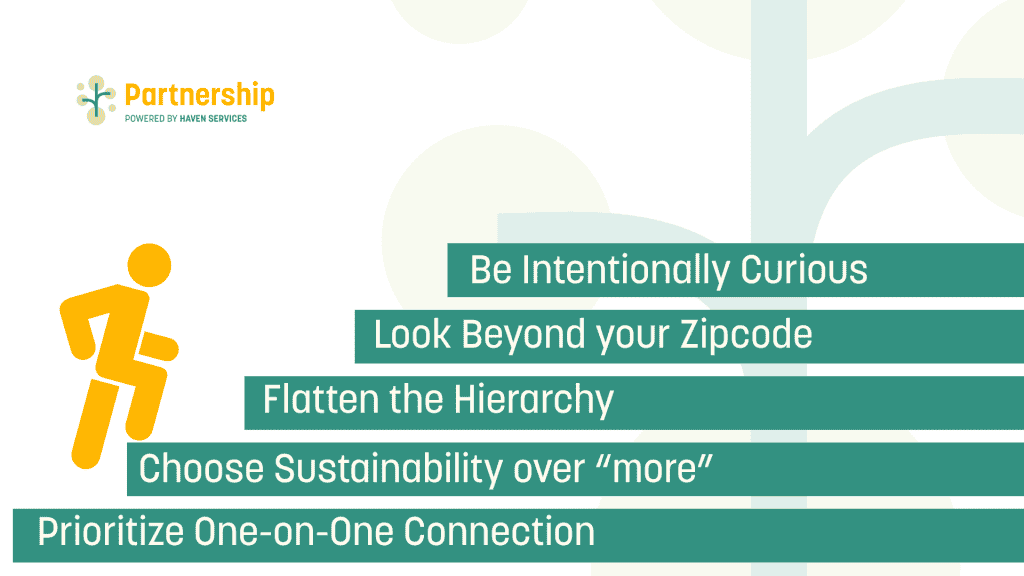
Tasha Van Vlack: That’s a big question. I think, you know, and I’m quoting Michelle Flores-Wren, who is brilliant here, because she said in an interview once that I did with her, like, “We just need to be curious in this sector.” And that actually is an intentional action. Like we have to be intentional with curiosity and take that to the table. And so that’s where getting out of your bubble and being curious with others… because it is harder to do it when you already know somebody, because you feel like you know them. Even getting out there and being like, “What are you trying to figure out right now? This is what I’m trying to figure out.” And what could that open for all of us if we just started to look out there and find places for trust, right? And find places for like the cool parts of this sector. This is a cool sector. And we often don’t remind ourselves how amazing this work is. But that almost takes a little bit of curiosity about how others are doing things because we know what our own struggles are, but we’re not great at going, “Oh, hey, let’s get in a conversation. And I’m going to tell you what’s awesome about my job right now,” because it’s easy to talk about the things that are hard. So.
Eric DePalma: I absolutely completely agree with that first of all because I feel like allowing at least just personally allowing myself to do that over the past year of just like shooting over a LinkedIn message or with a question not just like a “hey let’s connect” or whatever but like a “Hey I saw this, I saw you talking about this and I just wanted to like what was that like?” Or “I asked someone I was like hey I was on your website and you have a screenshot of the software you use. What was that? Cause I’ve never seen it before.” It’s also a form of socializing and bonding and it does feel good when you’re able to connect on those little levels. So community building happens in the little touch points. Community is not like forged in a once a year enormous conference. Like those are great, I love those things, they fill my bucket in a big way, but you can’t survive community on just that. That’s not enough. And you know it’s all those little moments of like reaching out and someone remembering you.
Tasha Van Vlack: I send job postings to members I know in the community where I’m like, “Oh my goodness, this would be cool for you. Are you still looking?” And it’s those moments when people remember you. And if you feel like you don’t have those people in your life, they’re out there, but you’re going to have to take that step. And that can be really frightening. And so I think we’re just trying to lower the barrier just a little bit and make it easier to meet cool people in the sector.
Eric DePalma: Love that. Well, thank you, Tasha, so much for joining me. I’m so excited. And just thank you for being our partner as well.
Tasha Van Vlack: I love it. This has been such a wonderful experience. I mean, yeah, working with you is fantastic. Love what is happening and what you guys are really like doing on a geographical level is kind of dreaming. And I’m just like totally into it and super excited for you guys.
Eric DePalma: Would not have been possible without you. So, so excited. Thank you so much for being the first here and helping us kick this off. And yeah, thank you.
Tasha Van Vlack: Cheers. Thanks, Eric.
The Problem: Isolation in a Vibrant Sector
The nonprofit sector is vibrant, filled with brilliant individuals doing meaningful work. Yet, structurally, it remains incredibly fragmented. Tasha Van Vlack describes this paradox as the core problem she set out to solve: “We’re not short on passion or ideas… [but] the thing we’re often short on was like this relational infrastructure of how do we stay connected?”.
Post-COVID, this isolation became acute. Nonprofit professionals were working in silos, often reinventing the wheel without spaces to speak honestly about the sector’s challenges. The solution wasn’t another resource library or a “one-size-fits-all tech,” but a mechanism to move people out of isolation and into meaningful human relationships.
Beyond “Networking”: The Power of Weak Ties
Traditional networking often induces eye-rolls because it feels transactional—speed dating for business cards. To counter this, Tasha utilized a model rooted in “weak ties” theory—the sociological concept that opportunities and novel information often live just outside our immediate circle of close contacts.
By facilitating opt-in, one-to-one video chats, The Nonprofit Hive allows leaders to step outside their local bubbles. This does more than just expand a Rolodex; it provides tangible capacity building. As Tasha notes, “When we go outside… our little zone of people… you get an opportunity to listen to some cool ideas that you didn’t even know existed”.
For a busy executive facing staff shortages, this connection can be a lifeline. It offers reassurance that they are not alone in their struggles, reducing the mental friction of the day-to-day grind. It also accelerates problem-solving; for example, members have discovered tools like “We Make Change” to secure volunteer tech support—resources they likely would never have found within their existing local networks.
Flattening the Hierarchy: Designing for Equity
A core tenet of the Partnership Program is ensuring that collaboration is equitable, not dominated by the largest players. Tasha addresses this power balance by intentionally flattening the hierarchy within her community.
Initially, she matched members based on years of experience, assuming veterans wanted to speak with veterans. However, the data showed a different reality: “People who are ten to twenty years in this sector actually state a lot that they’re looking to be mentored… many of us have not been mentored”.
By removing tenure as a primary matching filter, the platform fosters mutual learning. A nonprofit veteran might learn as much from a tech-savvy newcomer as the newcomer learns from them. This approach protects the conditions where “quieter voices can be heard,” ensuring that the community does not simply amplify those who already have the loudest microphones.
Redefining Sustainability: Growth vs. Enough
Perhaps one of the most radical insights from our conversation was Tasha’s approach to business modeling. While The Nonprofit Hive is a for-profit entity, it rejects the “rocket ship” growth mentality often pushed by the startup world.
Tasha distinguishes between sustainability and growth, a lesson vital for nonprofits trapped in the “Nonprofit Starvation Cycle.” She critiques the sector’s tendency to increase goals arbitrarily: “If your nonprofit is absolutely crushing it… adding thirty percent onto that just because you could sounds crazy”.
Instead, she advocates for a model of “enough”—finding value-aligned sponsors who respect the community (e.g., not selling member lists) and building a business that supports the team and the mission without burning out.
The Action: Be Intentionally Curious
Shifting from transactional to relational work doesn’t require a massive strategic overhaul. According to Tasha, the single most important action a social impact professional can take is to be intentionally curious.
Community isn’t built in a once-a-year conference; it is built in the “little touch points”. It happens when we reach out to a peer not to ask for a favor, but to ask, “What are you trying to figure out right now?”.
Next Step for Our Partners:
This week, we challenge you to send one message to a peer outside your immediate network. Do not ask for funding or a partnership. Simply ask a question about their work or share an appreciation for something they’ve done. As Tasha reminds us, “We just need to be curious in this sector”.
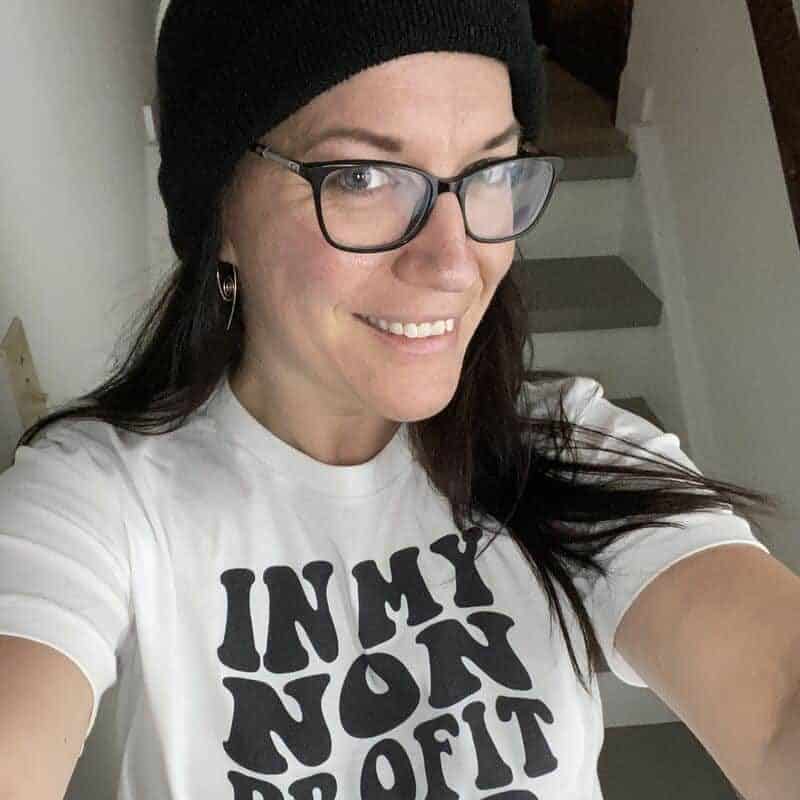
About Tasha Van Vlack
Tasha Van Vlack is the co-founder and CEO of The Nonprofit Hive. Her happy place is building community, talking nonprofit work/marketing/parenting and meeting new people. Being a cheerleader for nonprofiteers is where Tasha has found her niche – she hopes that by providing a space for connection that nonprofit work will become more collaborative and supportive.